Data Icon
Data Icon
About
Data Icon is a project, a bachelor's thesis for LUCA. The idea was to examine how the news reports on migration and migrants. Over two years I collected and archived articles and ran analyses on them, looking at how certain words were used in the newspaper, what factual figures could actually be found, and whether any figures were reported at all.
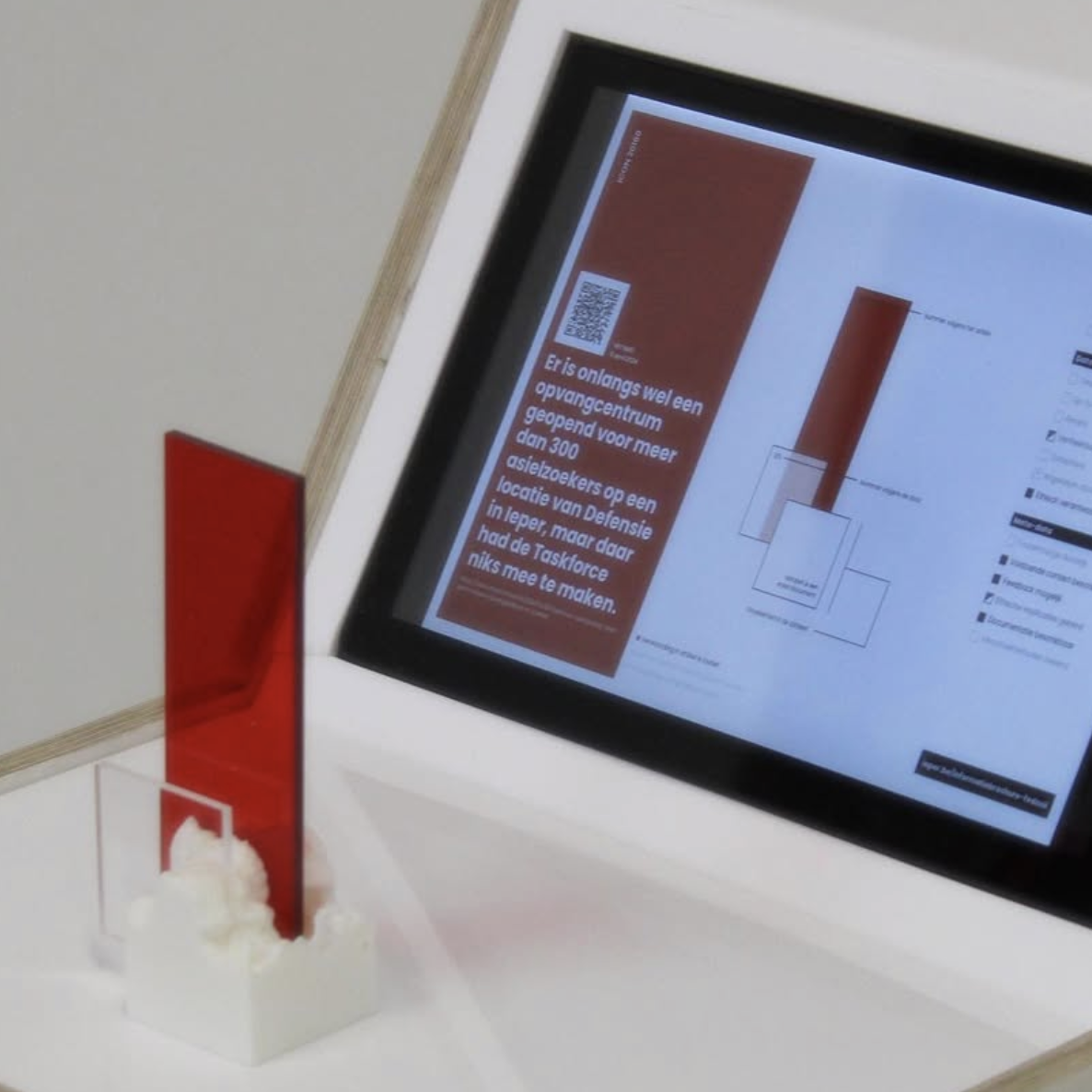
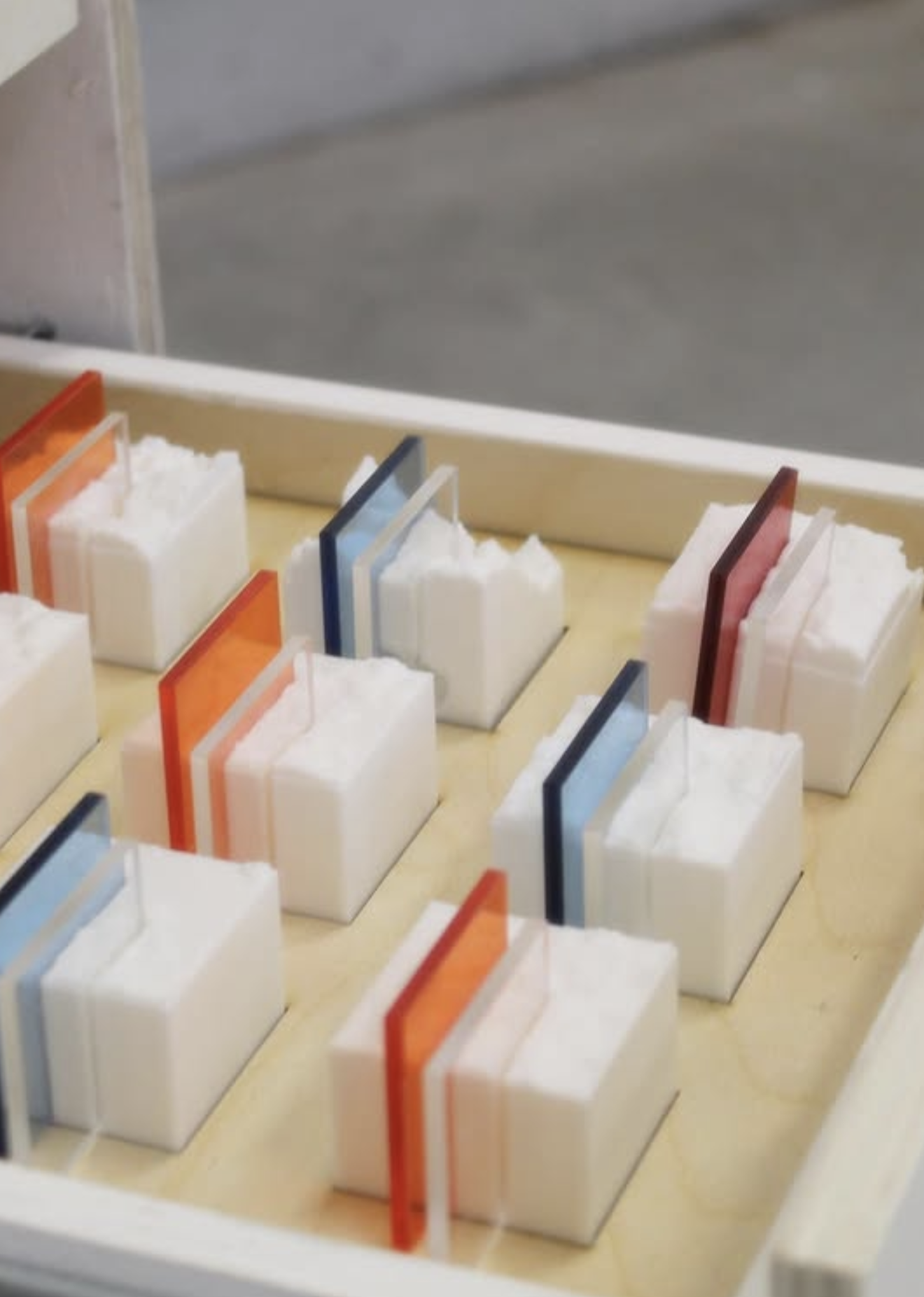
The outcome of the project was a physicalization: a 3D printed structure with plexiglass extrusions. The plexiglass showed how large the data discrepancy was for a given claim. Each block had a color corresponding to its data type, red, orange, or blue, with the actual figure printed behind it, so you could see at a glance how big the discrepancies were. The height of the extrusion and the amount of surface noise on the block both indicated the scale of the discrepancy.
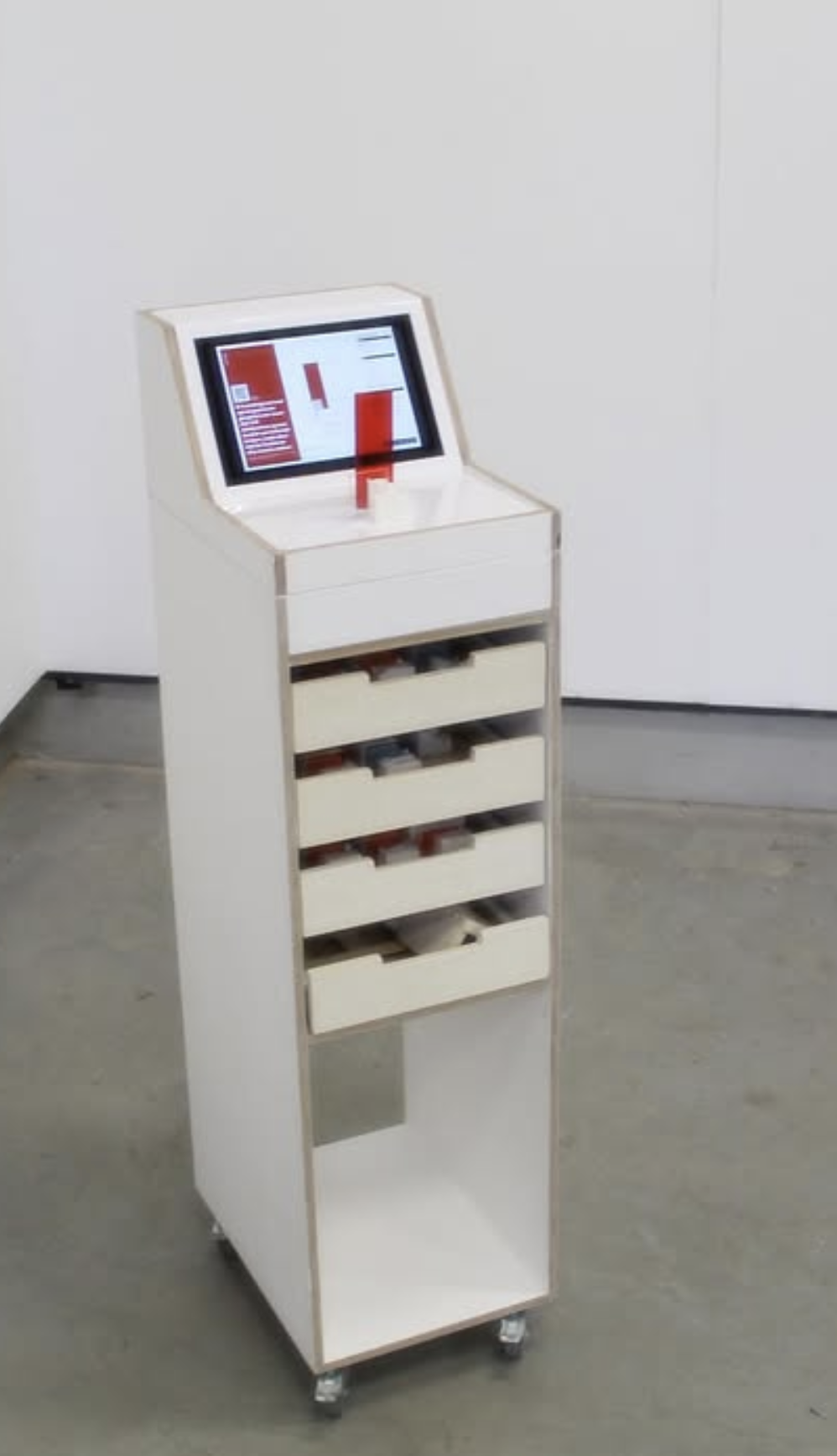
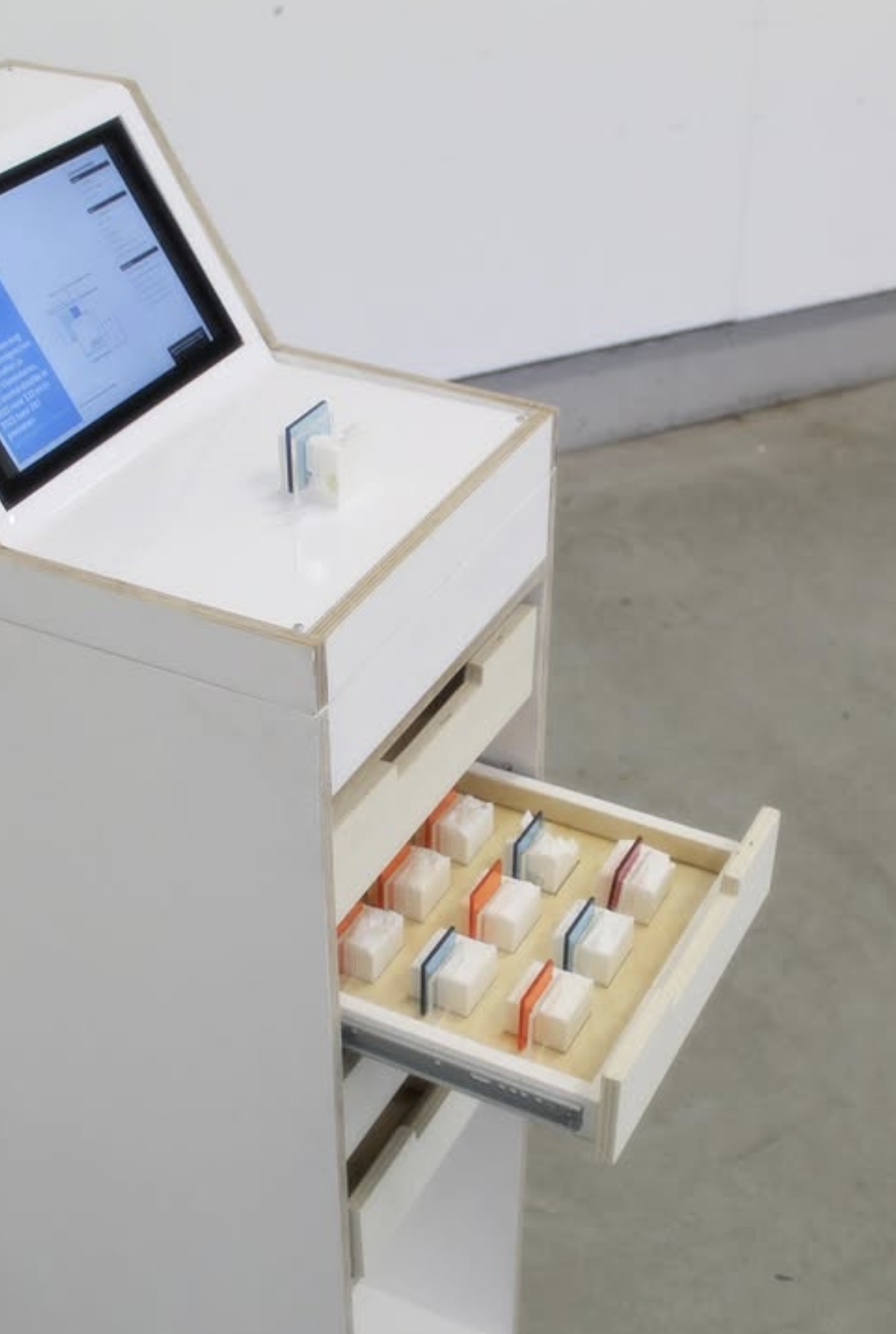
Each block had an NFC chip embedded inside it, letting visitors dig deeper into the data and get further explanation at an accompanying kiosk. Small drawers could be opened to remove a block, placed on the kiosk, and read out: which article it came from, what line was quoted, what the figures actually stated, and what the claim was about.
Sometimes this revealed genuine data discrepancies: figures that were simply wrong, or that didn't match the year in which they were quoted. Other times it was more a matter of wording, an article referring to "missing migrants" when the people in question had actually been reported missing by other migrants, subtly muddying the underlying data. And sometimes the issue was that no data could be found at all, with no source anywhere backing up a claim, making it impossible to trace.
One notable pattern: nearly every article came from the same source, VRT, the public broadcaster. News articles themselves rarely cited their sources, so tracing the origin of a claim was consistently difficult. An organization might be named, but with no data, source, or reference attached anywhere.
The goal was to make the data as exploratory as possible, giving visitors an overview of all the elements at once, so they could quickly pull out a piece, check how well it held up, and see at a glance how many discrepancies were out there.
Details
Year — 2024
Client — Self (LUCA)
Tags — Data exploration, Interactive, Physicalisation, 3D print
Tools — Processing, 3D print, NFC